Digital Infrastructure.
In 2013, I transformed a largely fax-based reservation process into a digital infrastructure for communication, customer management and new growth opportunities across the hospitality group of restaurateur Peter Pongratz, including the Paulaner Festzelt, Paulaner am Nockherberg and Grünwalder Einkehr. I developed the transformation strategy and business requirements, while the technical implementation was delivered together with an external IT partner. The result was a scalable digital infrastructure that reduced administrative effort, increased operational efficiency and created the foundation for future growth across the hospitality group.


The project originally began with a mandate to support marketing initiatives such as social media and newsletters for the hospitality group led by restaurateur Peter Pongratz, including the Paulaner Festzelt, Paulaner am Nockherberg and Grünwalder Einkehr. However, the analysis quickly revealed that the real business opportunity did not lie in marketing itself, but in the digital transformation of the underlying reservation, communication and customer management processes. Effective digital marketing was difficult to scale due to the absence of a structured and usable data foundation.
In 2013, more than 30,000 reservation requests were processed each year, predominantly via fax. Reservation management relied heavily on manual workflows and physical reservation books, while customer data was fragmented across different systems and locations. At the same time, there was no centralised infrastructure to systematically leverage customer information for communication, event utilisation, customer service or additional commercial opportunities across the hospitality group.
– More than 30,000 reservation requests per year, processed primarily via fax
– Reservation management relied heavily on manual workflows and physical reservation books
– High operational dependency on individual employees and manual process steps
– Limited transparency and traceability across reservation and communication processes
– No structured use of existing customer data for marketing and communication activities
– Limited scalability of communication, service and commercial initiatives
– High administrative effort and personnel costs driven by manual processes
– Synergies and commercial opportunities across the hospitality group remained largely untapped
The objective was to create a digital infrastructure for reservation management, customer communication and marketing activities across the hospitality group. By replacing manual processes with scalable digital workflows, existing customer data could be utilised systematically, administrative effort reduced and new growth opportunities unlocked across the organisation.
– Develop a digital strategy for reservation, communication and marketing processes
– Design a data protection-compliant data and CRM framework across the hospitality group
– Digitise reservation processes and enable the systematic use of existing customer data
– Reduce manual administrative effort and personnel costs
– Improve customer service, communication and operational processes
– Establish a scalable infrastructure for digital marketing, newsletters and event communication
– Unlock new revenue and growth opportunities across the hospitality group
As Founder & Managing Director of Aurumno, I began by analysing the restaurant group’s existing reservation, communication and data management processes. Based on this assessment, I developed a digital transformation strategy that integrated reservation management, CRM, customer communication and marketing into a centralised digital infrastructure. Working closely with an external IT partner, I defined the business requirements, guided the implementation and supported the organisational transition to new digital processes. The result was a scalable operational foundation that improved efficiency, enabled data-driven communication and unlocked new commercial opportunities across the hospitality group.
– Analysed existing operational processes, system structures and data management practices
– Developed a digital transformation strategy to improve efficiency and unlock new growth opportunities
– Designed a centralised system, CRM and data architecture across the hospitality group
– Defined a data protection-compliant framework for customer data management, including consent mechanisms for communication and cross-selling activities
– Defined business requirements for digital reservation, administration and customer communication processes
– Led the implementation together with an external IT development partner
– Replaced analogue reservation workflows with digital reservation processes via website and email
– Developed a centralised digital marketing and customer communication framework
– Supported organisational change and facilitated the adoption of new digital processes across the organisation

30,000+ Reservation Requests Digitised
Transition from manual, fax-based reservation processes to digital reservations via website and email

Digital Infrastructure for Growth Established
Created the foundation for efficient communication, customer data management and future growth

Administrative Effort Significantly Reduced
Reduced manual processes and improved operational efficiency through digital workflows

New Commercial Opportunities Unlocked
Enabled cross-selling and customer communication across the hospitality group
– Digitised more than 30,000 reservation requests per year
– Significantly reduced administrative effort and processing times through the introduction of digital workflows
– Established a centralised data and CRM infrastructure across the hospitality group
– Created a data protection-compliant foundation for customer communication, marketing and cross-selling activities
– Enabled the systematic use of existing customer data for communication, customer retention and cross-selling
– Unlocked new revenue and cross-selling opportunities through the centralised use of existing customer data
– Launched social media channels on Instagram and Facebook
– Introduced email marketing and newsletter communications
– Accelerated and improved communication processes across the organisation
– Achieved strong adoption of the new digital processes among employees and guests
– Created the foundation for future growth and digital transformation initiatives across the hospitality group
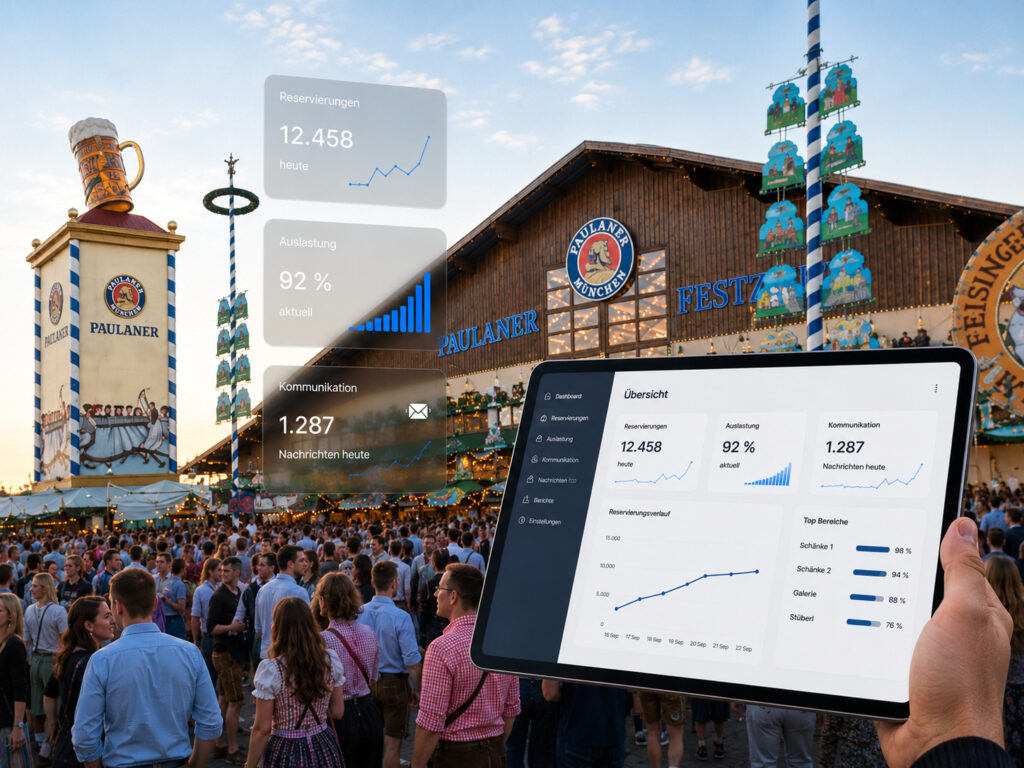
Note: Visualisations; these are not actual screenshots or original materials.
Further information and references relating to this case are available upon request.
The following competencies were applied throughout this project and reflect the core areas of my expertise.